
By Jenny Fulton
Introduction
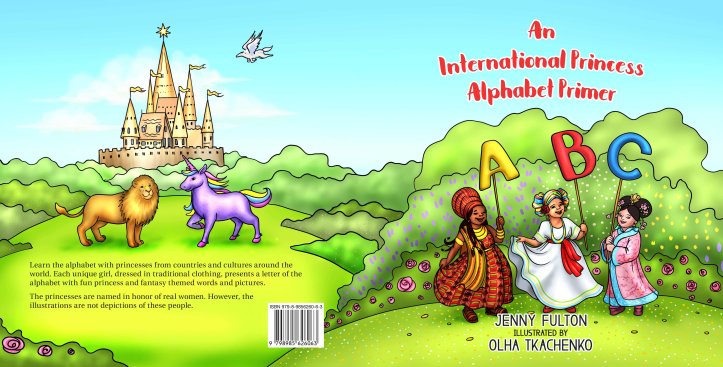
My book, An International Princess Alphabet Primer, features princesses from countries and cultures around the world. Each character is named after a real person. These are their stories.
Because the alphabet book was written for young kids, the biographies I’m sharing are short, child-friendly, often rose-tinted summaries.
Welsh Princess Gwenllian
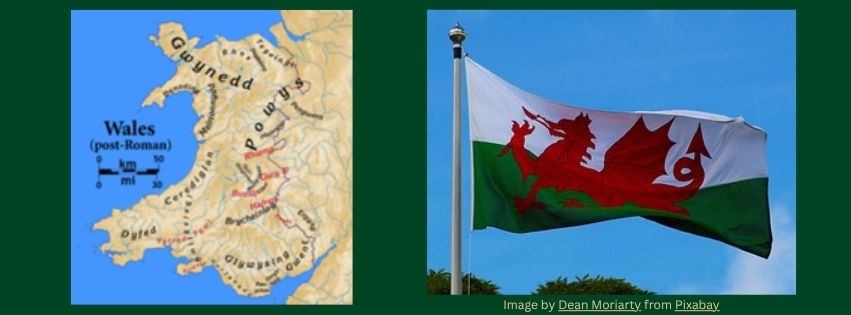
Welsh Princess Gwenllian is named for Princess Gwenllian ferch Gruffydd, the warrior princess of Welsh Freedom.
Princess Gwenllian was born in 1100 A.D. Her parents were the King and Queen of Gwynedd (a county in Wales) and one of her ancestors was the High King of Ireland (Brian Bóruma mac Cennétig). She was the youngest in a big family with three boys and five girls.
Gwenllian was known from a young age for her beauty, boldness, and long, bright red hair. As she grew older, people recognized how smart she was. Her parents made sure she had a good education, and her dad taught her how to sword fight.
When the princess was only thirteen years old, she met a handsome prince named Gruffydd ap Rhys. He was the Prince of Deheubarth (a neighboring county). They quickly fell in love. Three years later, when she was sixteen, they ran away together and got married.
In addition to having eight babies, Gwenllian spent much of her married life fighting beside her husband. Years earlier, before Gwenllian was born, William the Conqueror had come over from France (called Normandy at the time), and claimed much of the Welsh land for his army. After William died, King Henry I continued the invasion. His army captured Prince Gruffydd’s castle. So, instead of living in a comfortable palace, Gruffydd and Gwenllian escaped to the mountains. From there, they fought like Robin Hood. They attacked invading armies, stole money and other goods from wealthy enemies, and gave it to their Welsh people. The royal outlaw couple soon became known throughout the land for their bravery and generosity.
In 1135, King Henry I died. While England fell into civil war over who the next ruler would be, Welsh armies drove out some English lords who’d taken over Welsh land. Prince Gruffydd hoped this meant they could finally reclaim their land, including his castle. In 1136, when Gwenllian was 36 years old, the couple agreed that Gruffydd would travel north to meet with her dad so they could gather a large army and plan an attack that would completely push the Normans and English out of Wales.
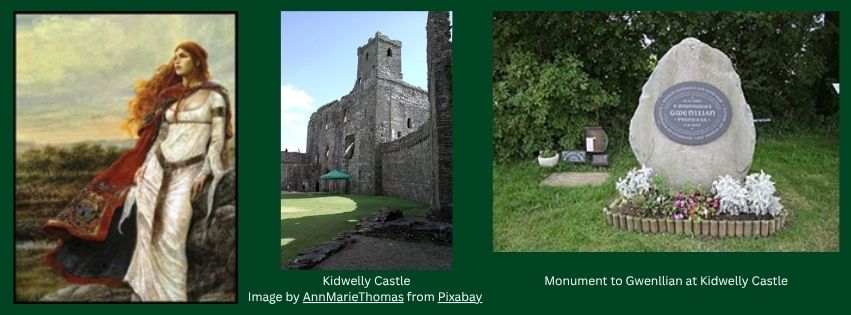
And then the worst happened. The enemy army discovered Prince Gruffydd was gone and decided to attack Gwenllian’s army. Early on February 28, 1136, spies told her the Normans were gathering an army at the nearby Kidwelly Castle (Cydweli Castle). The princess didn’t have much time to prepare so she thought fast. She gathered as many men from nearby villages as she could to join their fight. However, this still left her with only 200 warriors who weren’t well trained and didn’t have good weapons against a much larger army of experienced fighters with the best weapons.
Gwenllian divided her army into two groups. One group was put under the command of a Welsh chieftain named Gruffydd ap Llewellyn. Their job was to take boats to attack the Norman ships. The second group, which included Gwenllian’s two oldest sons Morgan and Maelgwyn, hid with her in the woods near Kidwelly. They would make quick attacks, hoping to surprise the enemy and keep supplies from reaching the castle. Her plan might have worked…
But the chieftain Llewellyn betrayed her.
Instead of taking boats to stop the Normans, Llewellyn met with their leaders and told them where Gwenllian and the rest of her army were hiding. He led some of them through hidden forest paths to cut off Gwenllian from behind while the rest of the Norman army surrounded them in the front.
Gwenllian fought fiercely and bravely, but there was no way she and her small army could win. Morgan tried to protect her, but Gwenllian was captured, then killed after the battle. Some say a spring of water later appeared where she died.
News of Gwenllian’s death spread quickly through Wales. Gwenllian’s husband, father, brothers, and the rest of the Welsh people were so angry about what happened that they united their forces to attack and drive out the Normans. This is known as the Great Revolt of 1136. They were urged on in every battle with the cry, “Revenge for Gwenllian!” This same battle cry continued for hundreds of years.
After the Great Revolt, Gwenllian’s youngest son, Lord Rhys, became the first Welsh ruler to be titled, “Prince of Wales.” Many years later, Gwenllian became an ancestor of the famous English Tudor dynasty.
Princess Gwenllian is still remembered as a beautiful, wise, loyal, and brave warrior and leader. Today, outside the walls of Kidwelly Castles, stands a monument to this amazing woman. Some people say her ghost haunts the castle and field where she died.
In her honor, the chief bard in her dad’s court, Meilyr Brydydd, wrote a lullaby called “Caniad Hun Gwenllian.”
“Sleep, Gwenllian, my heart's delight
Sleep on through shivering spear and brand,
An apple rosy red within thy baby hand;
Thy pillowed cheeks a pair of roses bright,
Thy heart as happy day and night!
Other Princess Bios
- A: African Princess Amina
- B: Brazilian Princess Isabel
- C: Chinese Princess Changping
- D: Danish Princess Sophie Hedevig
- E: Egyptian Princess Cleopatra
- F: French Princess Eleanor
- G: Guatemalan Princess Clara
- H: Hawaiian Princess Ka’iulani
- I: Inuit Princess Mikak
- J: Jewish Princess Esther
- K: Korean Princess Deokon
- L: Lithuanian Princess Aldona
- M: Malaysian Princess Puteri
- N: Navajo Princess Beulah
- O: Omani Princess Sayyida
- P: Portuguese Princess Catherine
- Q: Qatari Princess Moza
- R: Romanian Princess Marie
- S: Scottish Princess Matilda
- T: Thai Princess Saowapha
- U: Ukrainian Princess Olha
- V: Vietnamese Princess Y Lan
- W: Welsh Princess Gwenllian
- X: Mexican Princess Papantzin
- Y: Yemeni Princess Asma
- Z: Zenobia of Palmyra
Works Cited
- Brain, Jessica. “Princess Gwenllian and The Great Revolt.” Historic UK; Accessed Dec. 2024. https://www.historic-uk.com/HistoryUK/HistoryofWales/Princess-Gwenllian/
- Burges, Ginny. “Remarkable Women: The Life and Times of Gwenllian ferch Gruffydd, (Warrior Princess of Wales).” Rhap.So.Dy in Words; April 30, 2017. https://rhapsodyinwords.com/2017/04/30/remarkable-women-the-life-and-times-of-gwenllian-ferch-gruffydd-warrior-princess-of-wales/
- “Who was Gwenllian of Wales?” Twinkl; Accessed Dec. 2024. https://www.twinkl.com/teaching-wiki/gwenllian-of-wales
 Heart Soul Mind
[…] W: Welsh Princess Gwenllian […]
LikeLike
[…] W: Welsh Princess Gwenllian […]
LikeLike
[…] W: Welsh Princess Gwenllian […]
LikeLike
[…] W: Welsh Princess Gwenllian […]
LikeLike
[…] W: Welsh Princess Gwenllian […]
LikeLike
[…] W: Welsh Princess Gwenllian […]
LikeLike
[…] W: Welsh Princess Gwenllian […]
LikeLike
[…] W: Welsh Princess Gwenllian […]
LikeLike
[…] W: Welsh Princess Gwenllian […]
LikeLike
[…] W: Welsh Princess Gwenllian […]
LikeLike