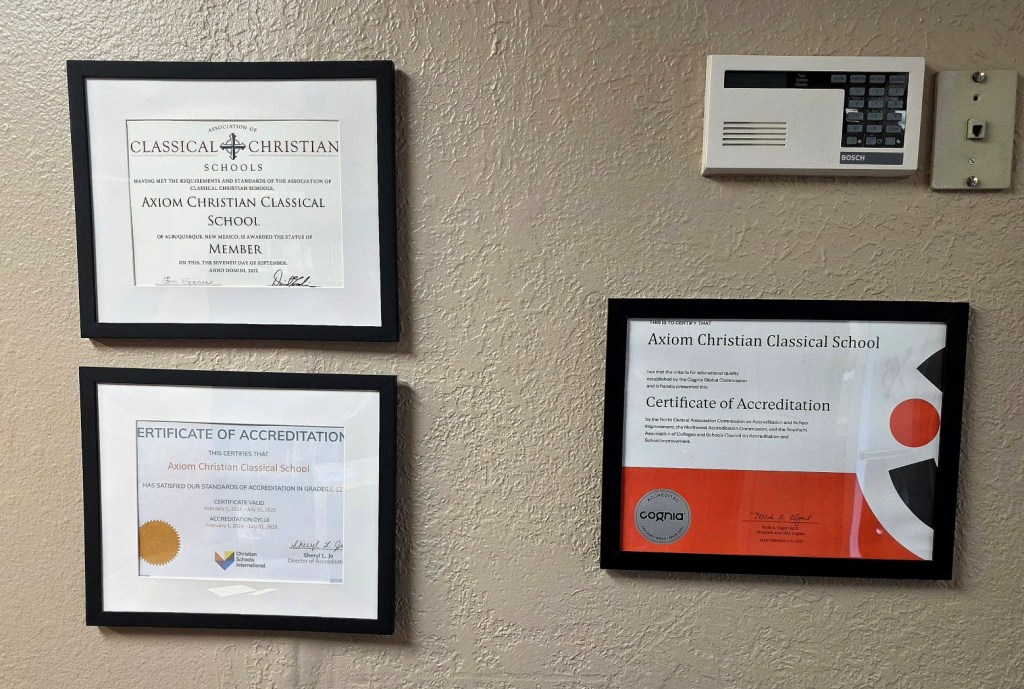
An Insider’s Look into a Christian Classical School
By Jenny Fulton
Classical education has been around for centuries. Its origins are generally described as beginning with the Ancient Greek and Roman societies, but its roots can be traced even further to the time of Mesopotamia and Ancient Egypt (https://circeinstitute.org/what-is-classical-education/).
Recent Growth: Although this educational approach hasn’t historically featured prominently in the United States, according to several sources, it has lately been growing in popularity. Classical Academic Press reported that, “It diminished in the early twentieth century with the rise of progressive schooling, but it never disappeared. Over the last forty years, it has been quietly returning” (https://classicalacademicpress.com/pages/what-is-classical-education).
John Adams Academy shared more specific statistics, stating, “Recent data shows significant growth in classical education. The Association of Classical Christian Schools reports that their member schools have grown from just a handful in the 1990s to hundreds today, with enrollment increasing by approximately 25% from 2019 to 2023” (https://www.johnadamsacademy.org/main/blog/classical-education-making-a-comeback).
Classical Education Defined
Classical Academic Press describes Classical Education as, “a centuries-old approach to learning that pursues truth, goodness, and beauty through the study of the liberal arts and the great books. It is a vast museum of wonder-filled rooms that a student can explore over a lifetime” (https://classicalacademicpress.com/pages/what-is-classical-education).
Taking this into the Christian sphere, the Association of Classical Christian Schools defines Classical Christian Education as, “a time-tested educational system which establishes a biblical worldview (called Paideia), cultivates the seven Christian virtues, trains students in reasoning through the Trivium (Grammar, Logic, and Rhetoric), and engages children in “the great conversation” through the historical Great Books” (https://classicalchristian.org/what-is-cce).
“Unapologetically Christian, enduringly classical, forming the virtuous scholar. To cultivate virtue through diligent scholarship in each student so that they may rightly reflect the image of God.” – Axiom Christian Classical School
My Inside Perspective: For the past five years (now in our sixth), my three kids have been attending Axiom Christian Classical School in Albuquerque, NM. My experience includes having kids enrolled in K-8th grades, substituting for various classes at the grammar and logic levels, (elementary and middle school), coaching elementary and middle school sports, and volunteering as a receptionist. I’ve had the opportunity to observe the rhetoric students (high schoolers) in action during their Symposium period and the grammar and logic students during Wonderlab. One year, I was on the Senior Thesis panel where I listened to teenagers deliver a fully memorized, well-developed speech and asked them probing questions afterwards to gauge the fullness of their understanding and perspective – they performed incredibly. I am currently in my 2nd year of serving as a member of the school board. These experiences have combined to give me a more complete picture and perspective of this form of schooling.
Our Community: As the sun rises over the Sandia Mountains, families load up their kids and make their way to Axiom. Most schools in Albuquerque are either neighborhood-centric or church-specific institutions that serve a limited demographic. This isn’t the case with us.
“We endeavor to serve families who desire for their children to be welcomed in an ecumenical faith setting where ideas have high value. We want a place where the three main branches of the historical Christian faith are accepted and celebrated.” – Axiom Deans
Our students come from other towns, rural mountain communities, reservations, the military base, affluent neighborhoods on the outskirts of Albuquerque, and mid-city districts known for their high crime rates. There are Protestant, Catholic, and Orthodox Christians, and some who don’t attend church at all. These families hail from all walks of life, and every morning they drive up to an hour or more because they embrace our emphatically Christ-centered lens in every classroom, subject, activity, and engagement.
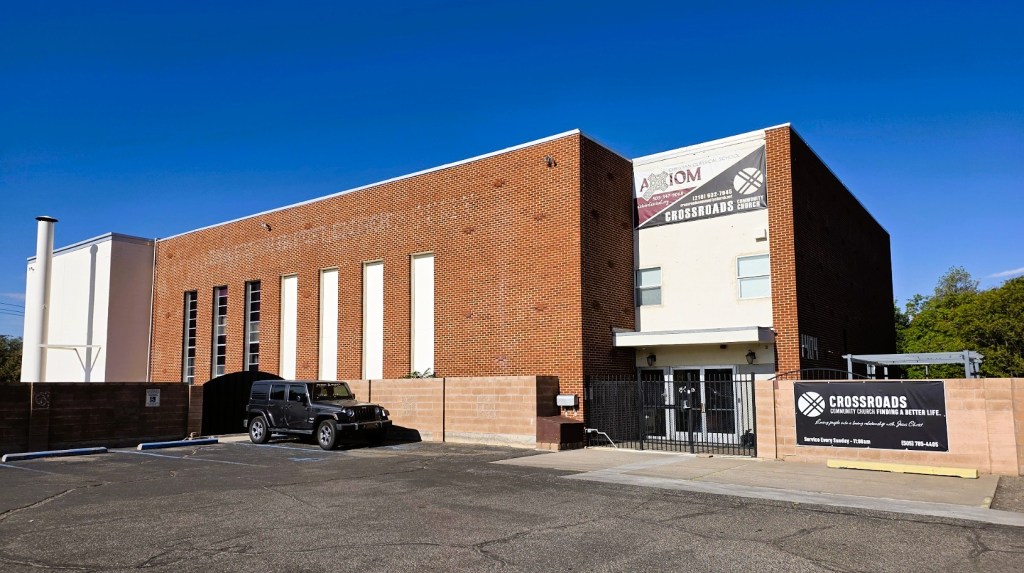
Our Building: Located close to the University and Downtown areas, Axiom is situated in a neutral zone between an upscale neighborhood and a region considered to be one of the most dangerous parts of town. Our building is nearly 70 years old and holds the unique distinction of having been the first, and for many years only, Protestant school in Albuquerque. It’s now the only non-church-specific Christian school in that section of the city. From the front, the three-story concrete and red brick structure doesn’t look like much, certainly not the site of a passionate educational community. But when you open the doors, you begin to catch a glimpse of the beauty that permeates the facility. It’s a beauty which begins with the pursuit of it in the hearts and minds of the Deans and staff who put time, thought, and energy into scrutinizing ideas and challenging themselves to continually grow in understanding.
A Day-in-the-Life of a Christian Classical School
History and definitions certainly have their place, but they’re limited in their ability to show you what this form of education actually looks like on a day-to-day basis. So, come with me and allow me to give you an insider’s peek into the workings of a Christian Classical School.
The Day Begins
The deans, teachers, and staff arrive at school early, some more than an hour before the 8 o’clock bell rings.
At 7:40, energetic students begin streaming into the building under the watchful eye and guidance of the deans.
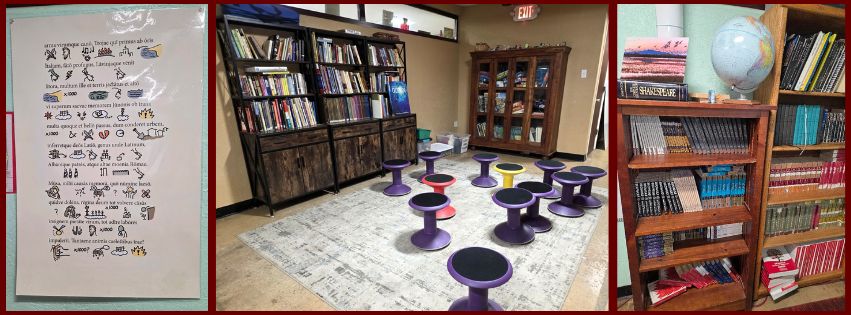
At 8:00, class begins. If you walk through the school, you’ll hear students of all ages, in every grade, reciting a passage of Scripture, a poem, and for the older kids, a phrase or piece of writing in Latin. Poetry selections, even at the youngest level, include those by Robert Lewis Stevenson, Shakespeare, Emily Dickinson, John Donne, Tennyson, and Lord Byron.
The remainder of the morning is focused on the core subjects, as well as art and music for the younger kids.
GrammarSchool (elementary) Core Content
Grammar kids are exposed to truth, goodness, and beauty via memorization, discussion, movement, hands-on activities, exploration, and more. They’re introduced to Latin through songs with catchy tunes.
The kindergarten teacher leads her young charges to different parts of the school to find examples of maps, locate objects to compare and contrast, and so much more of the concrete methods these kids need. At such a young age, these students learn to identify paintings by classical artists such as Vincent Van Gough. My youngest discovered her favorite book (Katie and the Starry Night by James Meyhew) after her teacher read it aloud in class. For the rest of that year, she begged me to read it to her time and again.
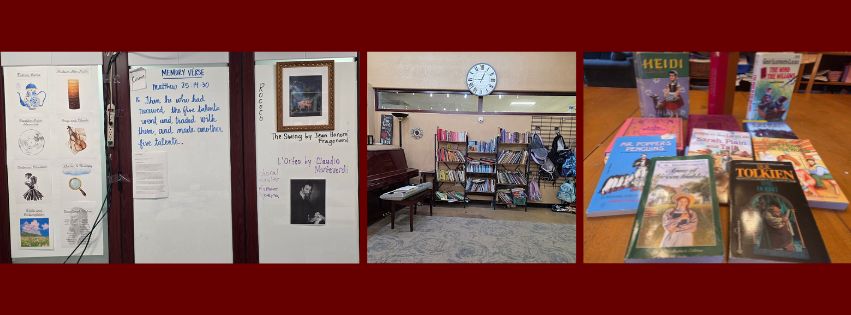
Literature at the Grammar level includes beloved classics such as The Tale of Peter Rabbit, The Princess and the Goblin, Pinoccio, The Secret Garden, Anne of Green Gables, and The Hobbit. When she was in 3rd grade, my middle child, who struggles with dyslexia, fell in love with literature through class read-alouds, discussions, and story-related crafts.
Logic School (middle-school) Core Content
Students in the Logic School, while still presented with content-heavy core subjects, are encouraged to think critically and question ideas. They’re taught to identify logical fallacies and tasked with debating a viewpoint opposite the one they agree with. Literature reads include books of the Bible, Robin Hood, The Odyssey, and Hamlet. They dive deeper into Latin studies and discuss the roots that comprise many of the words and meanings in our English language. They also memorize progressively longer passages in Latin.
Afternoon Arts
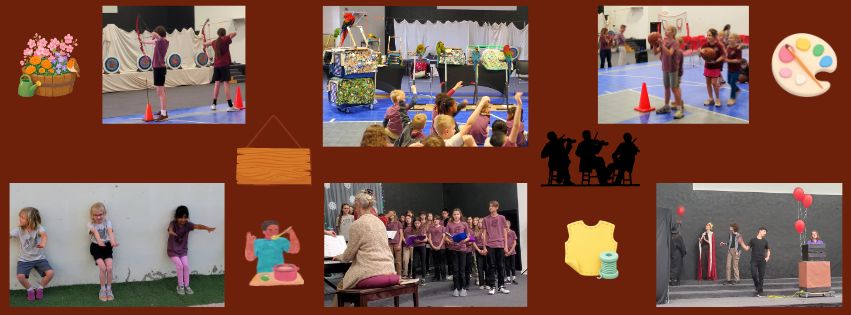
Core content, completed when mental sharpness is at its peak, ends at lunchtime. After the noon break, students disperse to a vast array of enrichment courses (Fine Arts, Physical Arts, Common Arts), meant to facilitate the education of the “whole man” by strengthening their physical bodies and nourishing their souls through experiences that encourage and facilitate a state of wonder. These classes include P.E., choir, orchestra, art, drama, journalism, sewing, woodworking, gardening, and cooking.
Wonderlab
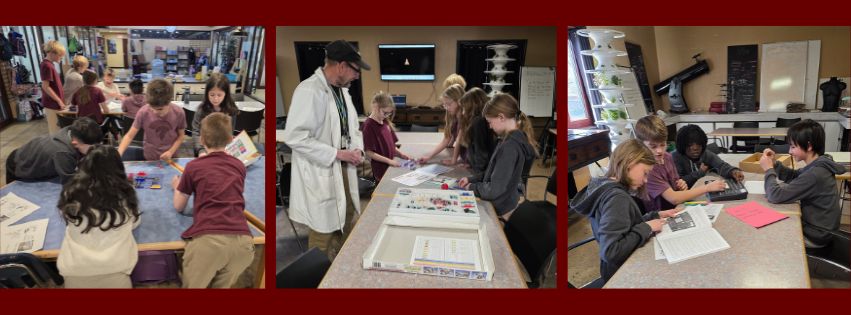
Once a week, 2nd-8th graders, divided into three age-appropriate groupings, participate in a 2-hour Wonderlab led by the Deans and various other teachers. Rather than give students material they’ll have to worry about being tested on, Wonderlab was created to encourage and cultivate a continuing sense of wonder and excitement about God’s creation through tangible exploration, interactive play, and hands-on activities.
After a short lesson in which they’re given foundational vocabulary and a brief explanation on the topic, students get out of their seats and spend the rest of the time exploring the concept at various stations. They may construct snap circuits together, build a sound board, or act out the way waves move. Their joy is evident as laughter and excited squeals fill the air. My kids are full of excitement these days, eager to describe what they learned as we drive home.
Rhetoric School (high school)
This is where you see the culmination of the Classical Education method. In Grammar school, the students are given a strong foundation with a wealth of content knowledge. In Logic school, they’re taught how to scrutinize ideas, think critically from a variety of angles, use logic, and question ideas. Rhetoric school brings all those skills together and adds to them by teaching the growing teenagers how to apply them in ways that will enable them to make a difference in our world. They’re also taught how to engage in respectful dialogue with those who hold differing views.
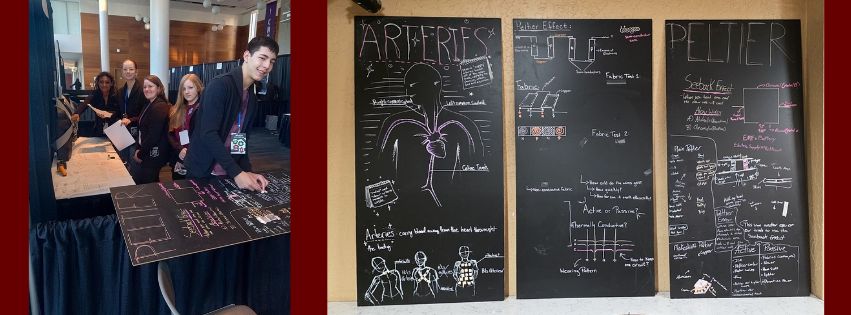
STEM: One of the Rhetoric electives is a Zero-Hour STEM Challenge class. Each year, our governor creates a STEM challenge requiring students to answer a broad question which will improve our world. Participants present their prototype/solution to 40 local companies, including Sandia Labs and Presbyterian Hospital. Axiom’s students have won five years in a row, which is every year they’ve participated. They compete against large districts, STEM schools, preparatory schools, and other classical schools, so this is a massive accomplishment that demonstrates the students’ creativity, critical thinking, and persistence. This past year, Axiom won the award for Most Innovative and Creative.
“We strive in our program development to be innovators and that is what was made obvious to all the judges, corporate sponsors, and participants. Glory to God. Asked how we keep winning, I would say there is no magic recipe, but I would say we have some key ingredients that shape our kids’ minds that make them innovators:
1. Fed Curiosity
2. A Focus on Music and the Arts
3. One Foot in the Ancient Mindset and the other in Modernity
4. Of course, the Willingness to Work Hard and Fail over and over.”
– Vince Zunic, Dean of Development
Core Content: In addition to rigorous general education courses, Rhetoric students take classes in oration and rhetoric. They learn and practice what it means not just to think about different perspectives, but how to present their viewpoint effectively through speaking and writing. Instead of Latin, they study Greek. They also receive college and career counseling. This comprehensive curriculum has enabled every one of our graduates to receive entrance into their first choice of college.
Symposium: At Axiom, teenagers learn to master something many adults in our culture struggle to accomplish – a respectful, prolonged discussion about a topic in which there are multiple points of view. This is Symposium. Once every two weeks, young people in grades 9-12 gather in the cafeteria for the last two hours of the school day. Tables are arranged in a rectangle with one of the deans and at least two other teachers seated at one end. The students read an article about a subject that was selected based on their interests and concerns. When everyone has finished reading, they stand and recite the Statement of Faith.
After a short break for snacks, the students return to their seats, and the dialogue begins. One student identifies a logical fallacy in the article and provides a counterpoint. Others support their arguments with historical events and quotes from classical writers and artists. Tension ebbs and flows as students agree and respectfully disagree with each other. Moments of humor break up times of greater strain. The adults guide and push the students to consider different angles of the issue without revealing their own stance or pushing their own opinions.
Most of the time, the students don’t reach a definitive conclusion, for the goal of Symposium isn’t to dictate what students should think but to guide them in how to think and talk about anything and how to interact with and love others in the process. Because Axiom views their students as human beings who will influence other human beings. It asks them to see themselves in high regard as image-bearers of Christ so they may see that image in others.
“We want our students to realize education is for the greater good of mankind and should be employed in loving God and neighbor.” – Axiom Deans
A Full and Rewarding Day
At the end of each full day, kids rush to greet their parents, full of exciting stories to tell about everything they did.
“We love classical, Christian education. Being a lifelong learner has been the joy of our adulthood. We are passionate about having a place where Christians of all backgrounds can come together in unity around the same cause – to provide our children with a high-quality, well-rounded education in a place where Christ is not limited to our own understanding of Him, where we can learn to hold an idea without accepting it, and practice what it means to consider another perspective without feeling threatened.” – Axiom Founders