
By Jenny Fulton
The Bible is filled with interesting people from all walks of life who encountered God in various ways, whether or not they were aware of or acknowledged that interaction.
The Bible doesn’t glamorize its heroes, life, or the human condition. It shows us real people who experienced the highs and lows of living in this world, wrestled through trials and temptations, felt the full spectrum of emotions, rose to success, and fell to rock bottom. It displays God’s patient persistence in reaching out to the people He created and loves, shows us how He deals with those who accept Him and those who reject Him.
Studying a person in the Bible enables us to connect with those who lived before, understand that we’re not alone in our struggles, and learn valuable lessons about who God is and how He interacts with us.
In this article, as in the others in this series, I’ve broken down the process I’ve used for Bible Character Studies. Sometimes I include every step, sometimes I only use a few. It all depends on the subject, time, resources, your goals and reasons for studying, and God’s guidance.
13 Steps to do a Bible Character Study
Step 1: Consider Why

Take time to question and identify, if you can, why you want to study this particular person.
Why, out of all those named and referred to in the Bible, does this individual stand out to you? Are they one your favorites? A character you’ve connected to without really knowing why? Have you heard them mentioned or preached about in sermons or podcasts? Does something about their life and/or character really stand out to you and you want to know more? You have no idea why you’re interested, but they just keep coming to mind?
We may not, probably won’t, know exactly why God is leading us to these studies, but thinking about some of these questions can open our minds to be aware of what might be driving our interest. What questions should we be asking? What does God want to show us? Say to us?
Step 2: Pray

“But the Helper, the Holy Spirit, whom the Father will send in My name, He will teach you all things, and bring to your remembrance all that I said to you” John 14:26 (NASB 95).
Ask God to give you eyes to see and ears to hear, to help you understand and reveal what He wants you to learn from your time with Him as you dig into His Word.
Step 3: Identify What You Know

Our brain often likes to work smarter, not harder. Therefore, when it thinks it already knows something, the part responsible for learning and taking in new information powers down and takes a nap. Because why engage and put effort into the thought process and critical thinking skills when you already know the answer? Identifying what we think we know can help us be watchful of those moments where we may actually need to work harder to re-engage our minds.
List everything you know about the person you’ll be studying. It can be as basic as knowing which book of the Bible they’re primarily found in or any comments/commentaries/sermons/etc. you’ve heard or read about them.
Step 4: Search for their Name in the Bible
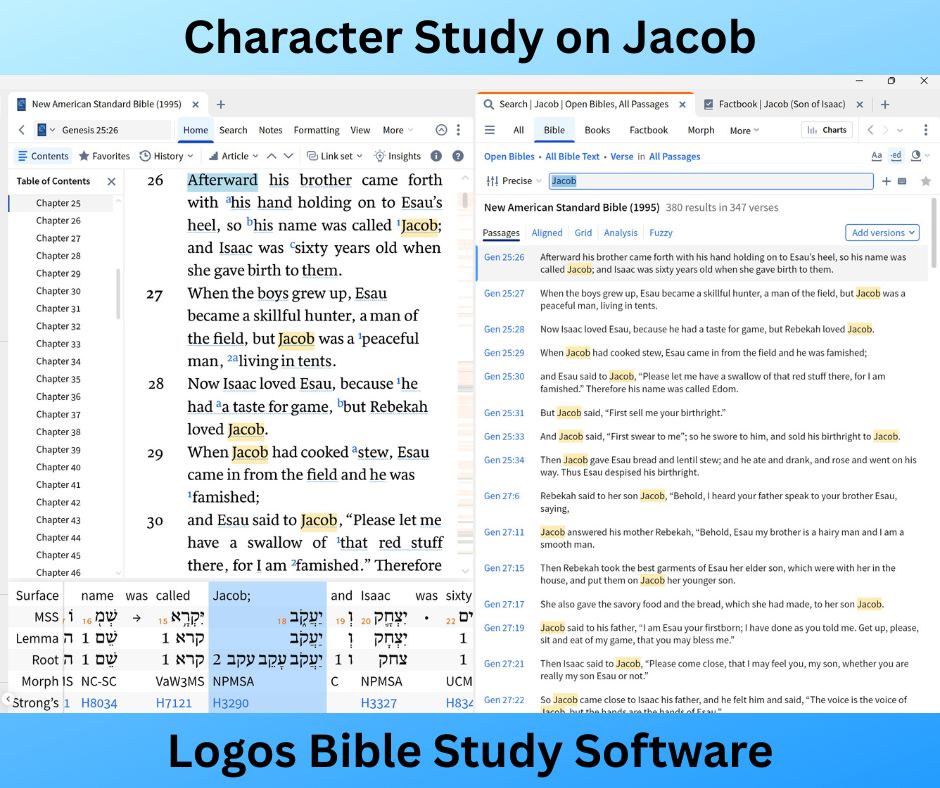
Using your favorite Bible translation, search for every time their name shows up in the Bible.
If they were given multiple names, you made need to search for each variation. For example, Jacob in the story of Jacob and Esau is also referred to as ‘Israel.’
For some names, such as ‘Isreal’ and ‘Saul,’ you’ll need to filter out the verses that aren’t referring to subject you’re studying.
Depending on the type of study, you can filter your search by verses that show up in the Old Testament or New Testament.
Some tools you can use for your search include:
- Strong’s Exhaustive Concordance of the Bible (or any Concordance)
- Concordance or Index at the back of Study Bibles
- LOGOS Bible Study Software (my personal favorite)
- BibleGateway
- Bible Hub
Step 5: Record Each Verse
Record each relevant verse on a separate paper/document.
Briefly read each verse. You don’t need to spend much time on it at this point as you’re merely gathering overview information.
Make note of any general observations you glean from this overview.
Step 6: Examine Each Verse Closely
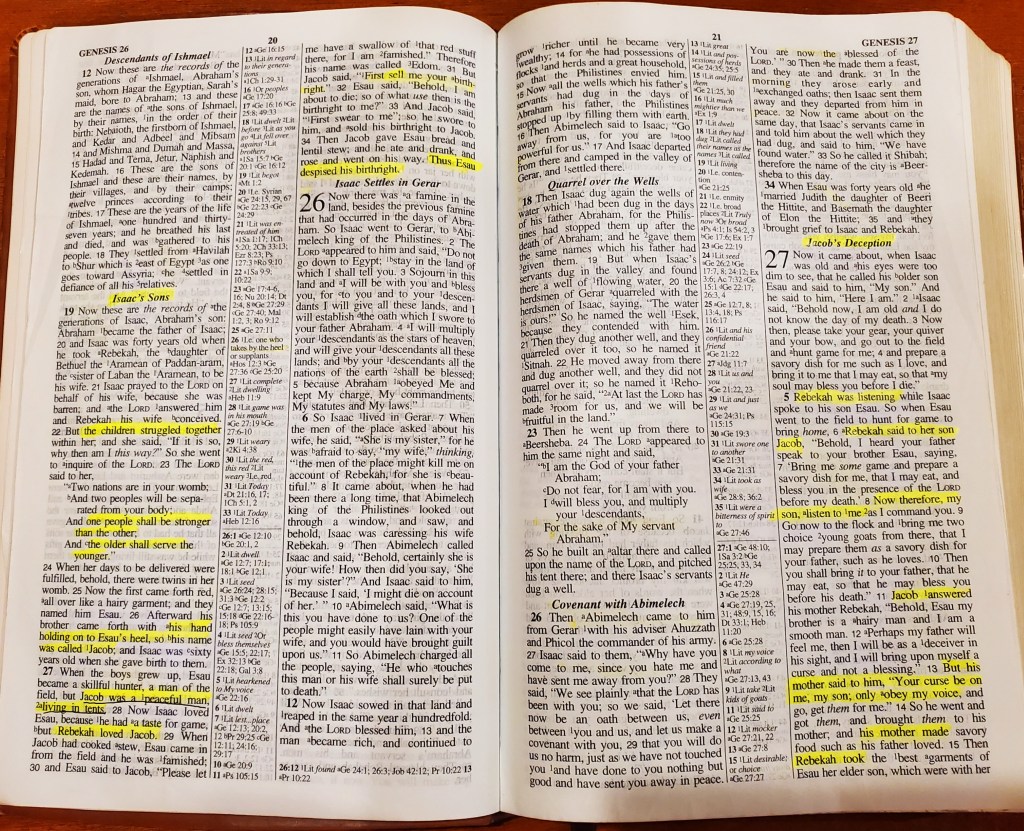
Read the verse/s in your favorite Bible. Make observations. Underline any key words or phrases that stand out to you. Ask questions. Answer the ones you can after only one reading and try to answer the rest as you go through the study.
Some questions you may ask:
- What is your initial understanding of the verse/passage?
- What stands out to you?
- Who is speaking? Do you know anything about the speaker’s character? What is their connection to the person you’re studying?
- Who is the audience? Do you know anything about the audience’s character? What is their connection to the person you’re studying?
- What does the verse directly say about the person you’re studying?
- What does it imply about the person you’re studying?
Step 7: Read Before and After
What is the context of each verse that mentions your subject? What happened before and after?
Read the verse before and after each verse on your list. Back up and read a few more verses before and after. Read the whole chapter, or more, to receive the greatest context for your character’s life.
- Where does the context for this person begin and end?
- What circumstances are surrounding their life?
- Does seeing the greater context of each verse impact your understanding of the individual?
Make notes and record your observations and what you’re learning in each section.
Step 8: Look up Notations
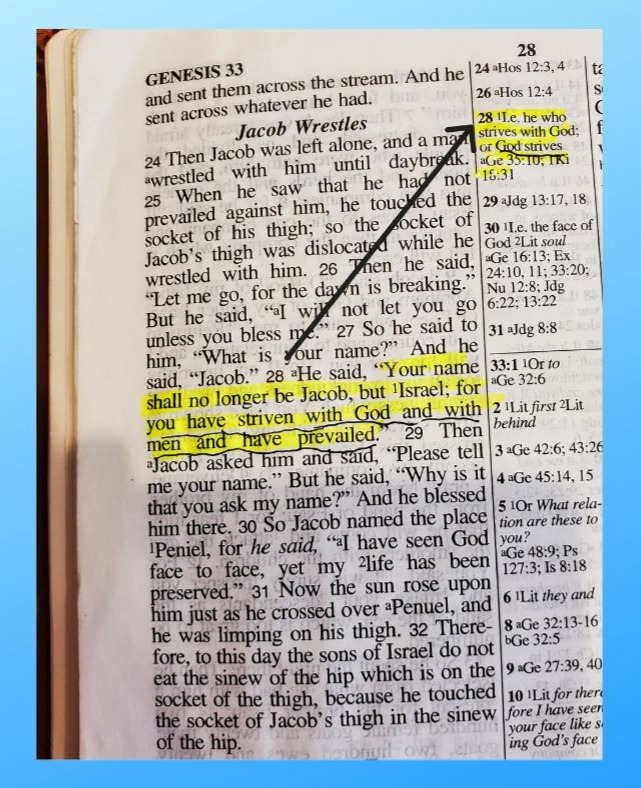
Some Bibles have notations in the center margin and/or at the bottom of each page (these are sometimes called Study Bibles or Reference Bibles). If you have a Bible that includes cross references, look up each verse and write them down or copy/paste them to a document, along with the original verse.
Make observations, underline key words and phrases, and ask questions such as:
- How does this verse relate to the original one?
- Does it tell me anything new about the character, their life, or how God is interacting with them?
Read before and after the cross-referenced verse to gain more context.
Do the cross-referenced verses impact your understanding of the original verse/s?
Step 9: Read and Compare Different Translations.
If the verses you’re studying contain words you want better clarity on, you can read the verse in different Bible translations. LOGOS Bible Study Software or online sites such as BibleGateway, Bible Hub, and bible.com (YouVersion Bible app) are great places to find and compare translations.
- Does the word choice in each version impact the overall meaning, provide greater clarity, make it more confusing, etc?
- Which translation seems to resonate or fit better with what you’ve discovered so far?
Step 10: Research Greek or Hebrew Words
Look up the original Greek or Hebrew for any words (or verses) you want a greater understanding of. The LOGOS Bible Study Software software or app is a great way to do this. Bible Hub and Scripture 4 All are two online sources I found that provide a way for you to see the Greek and Hebrew translations.
Does discovering the original, literal meaning of the original language impact your understanding of the character, their life, or God’s dealings with them?
Some resources for learning more about the Greek and Hebrew words and definitions (included w/ LOGOS software): The Theological Dictionary of the New Testament, Greek-English Lexicon of the New Testament, Strong’s Exhaustive Concordance of the Bible, Strong’s Hebrew-Aramaic Dictionary of the New American Standard Exhaustive Concordance.
Step 11: Read Commentaries
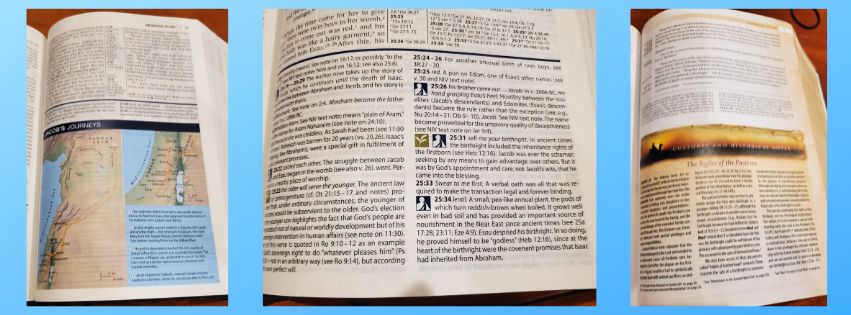
Look up commentaries on the person, verses, and/or passages you studied and compare their findings to yours. Do you agree or disagree with their conclusions? Did they discover something you missed? Something else that makes you think? Something that adds another piece and creates a fuller picture?
To find a commentary, you can use a study Bible, a commentary you’re already familiar with, or do a search for commentaries on the character you studied.
Step 12: Summarize

Write a summary of what you learned.
Did you find any commonalities between you and the person you studied?
How did God respond to the character in each part of their life?
What lessons did you learn about that individual’s heart, mind, character, life, and how God interacted with them?
Step 13: Pray and Apply

Think about everything you’ve learned. What did you learn about God through the study? Ask God to show you what He wants you to take away and how He would have you apply it to your life. Ask Him to give you the strength and wisdom to live out what you’ve learned and to grow closer in your relationship with Him.
Continue to seek Him.
 Heart Soul Mind
[…] How to Study the Bible: How to Study a Person in the Bible […]
LikeLike
[…] How to Study a Person in the Bible […]
LikeLike
[…] How to Study a Person in the Bible […]
LikeLike
[…] How to Study a Person in the Bible […]
LikeLike
[…] How to Study a Person in the Bible […]
LikeLike
[…] How to Study the Bible: How to Study a Person in the Bible […]
LikeLike